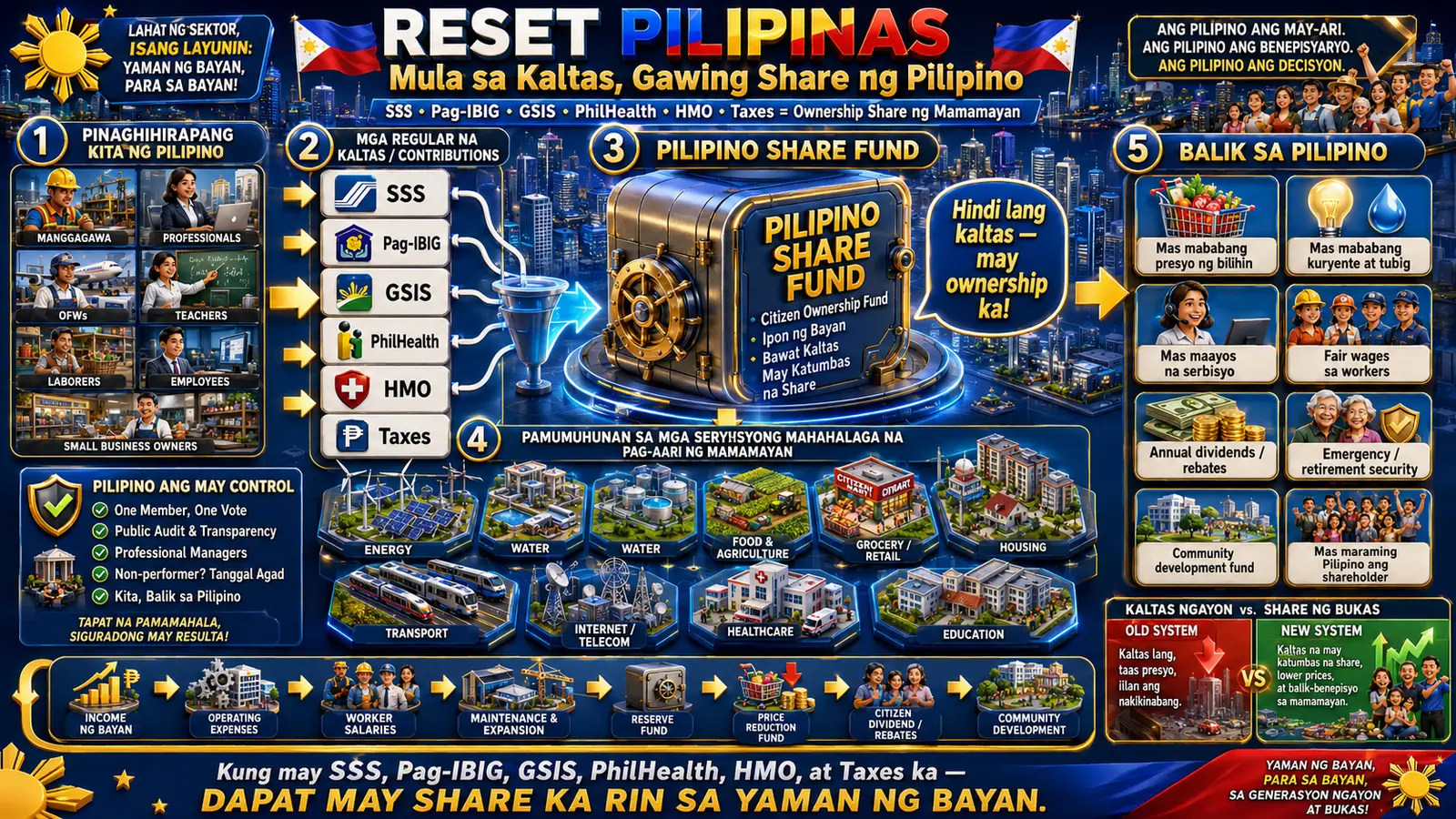
Hindi Lang Kaltas - Share Mo Yan
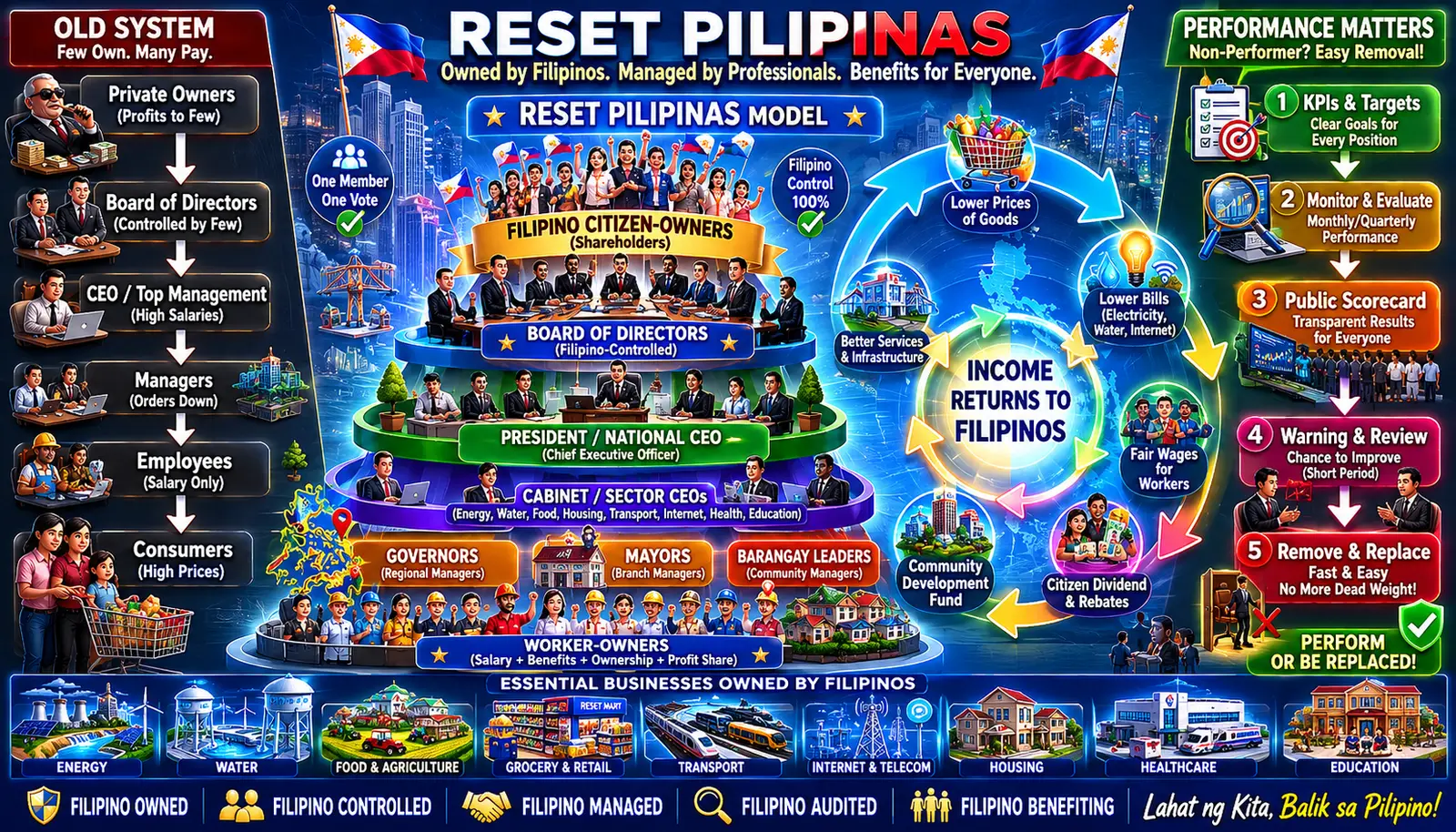
Lumang Sistema
- Pilipino ang nagbabayad
- Pilipino ang kinakaltasan
- Pilipino ang bumibili nang mahal
- Iilan ang may-ari
- Iilan ang may control
- Iilan ang yumayaman
Reset Pilipinas
- Pilipino ang nagbabayad
- Pilipino ang may share
- Pilipino ang may control
- Pilipino ang worker-owner
- Pilipino ang citizen-owner
- Pilipino ang makikinabang
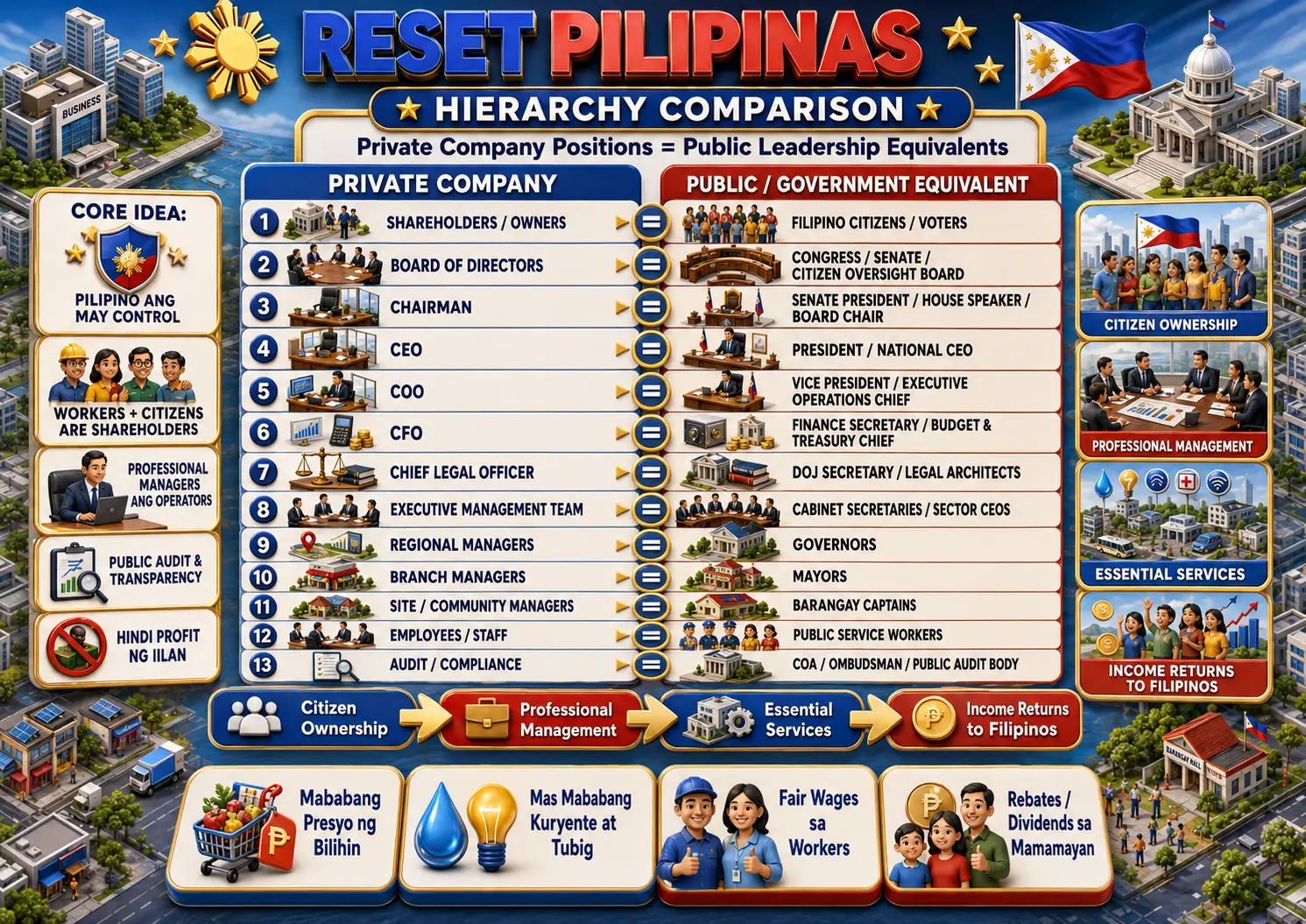
Hierarchy Comparison: Private Company vs Reset Pilipinas
Ang gobyerno at essential economy ay dapat patakbuhin na parang high-performance organization, pero ang owner ay hindi iilang pamilya o korporasyon. Ang owner ay ang Pilipino.
Private Company
- Shareholders / Owners
- Board of Directors
- Chairman
- CEO
- COO
- CFO
- Department Heads
- Regional Managers
- Branch Managers
- Employees
- Auditors
- Legal Department
Reset Pilipinas Equivalent
- Filipino Citizens / Worker-Owners
- Filipino-Controlled Citizen Board
- Board Chair / Oversight Head
- President / National CEO
- Vice President / National COO
- Finance Chief / Treasury Head
- Sector CEOs
- Governors / Regional CEOs
- Mayors / Local Branch CEOs
- Public Service Workers / Worker-Owners
- COA / Independent Audit Body
- DOJ / Legal Architects / Courts
Important Rule
Hindi politician ang may-ari. Hindi private oligarch ang may control. Ang Pilipino ang shareholders. Ang BOD ay Filipino-controlled. Ang CEO at managers ay hired public executives na accountable sa tao.
Filipino-Controlled Board of Directors
Kung Filipino-owned ang system pero ang BOD kontrolado ng iilang grupo, walang tunay na reset. Dapat Filipino-owned, Filipino-voted, Filipino-managed, Filipino-audited, at Filipino-benefiting.
Citizen Representatives
Boses ng ordinary Filipino consumers and citizen-owners. Dapat may voting power ang members.
Worker Representatives
Boses ng employees/operators na may direct experience sa operations and service delivery.
Sector Experts
Energy, food, water, healthcare, housing, finance, logistics, digital systems, and manufacturing experts.
Legal and Compliance
Lawyers and compliance officers para sa legality, contracts, rights, and anti-abuse controls.
Independent Audit
Audit body na hindi controlled ng management para bantayan ang gastos, contracts, and corruption risk.
Consumer Protection
Dedicated protection para sa presyo, quality, complaints, refunds, and service standards.
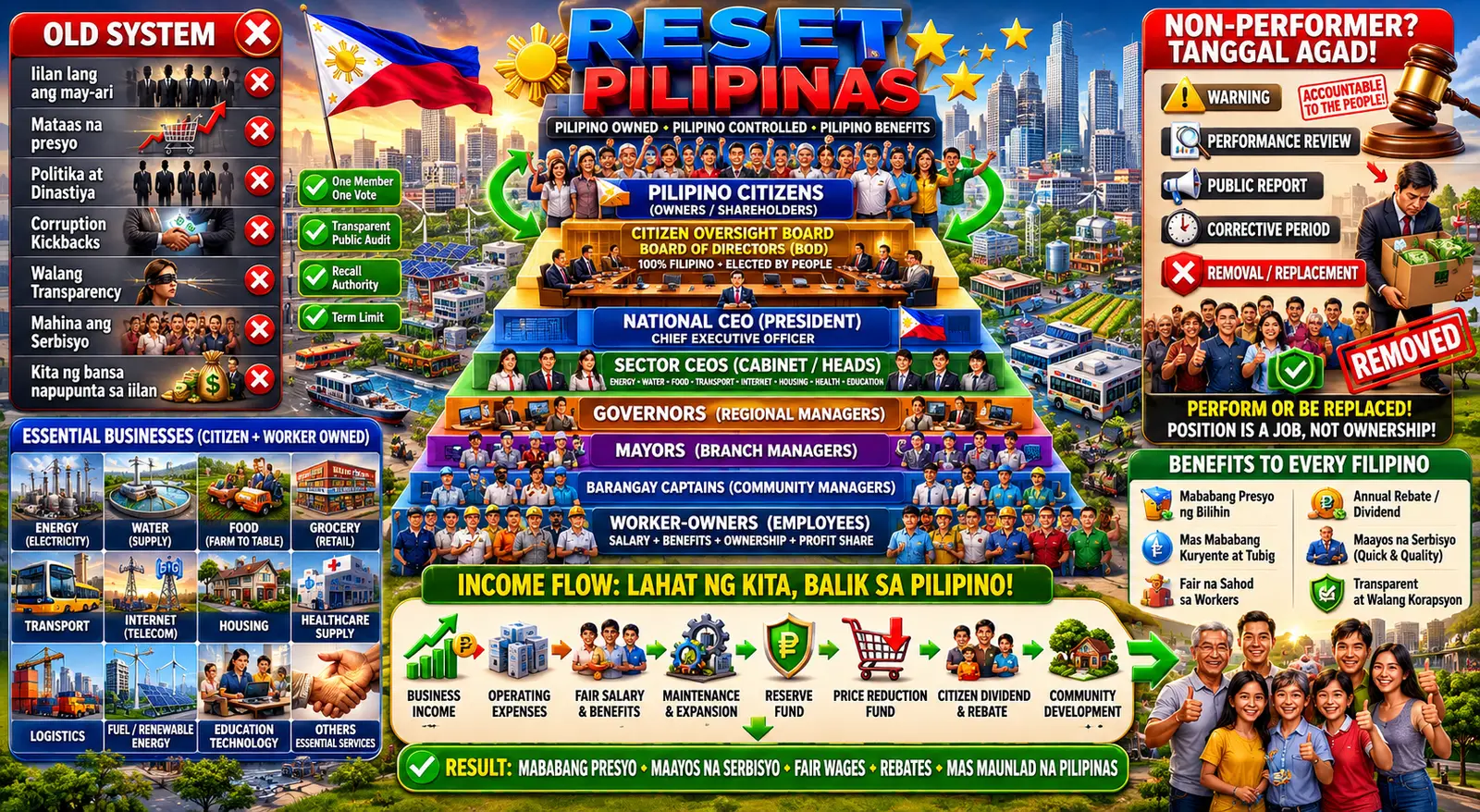
Non-Performer? Tanggal Agad.
Sa Reset Pilipinas, walang permanenteng pwesto para sa palpak, corrupt, absent, or walang output. Ang posisyon ay trabaho, hindi mana.
KPI Failure
Kapag hindi naabot ang target sa presyo, serbisyo, trabaho, audit, or project delivery.
Public Flag
Ilalabas sa public scorecard ang issue: delay, overpricing, complaints, or poor performance.
Performance Review
May investigation, explanation, audit check, and corrective action plan.
Corrective Period
30 to 90 days depende sa severity. Kung walang improvement, proceed to removal.
Removal / Replacement
Kung proven non-performer or corrupt, tanggal at palitan ng mas competent.
Public Report
Ang reason ng removal at next action ay dapat transparent sa members.
Red Flags
Bagsak sa audit, overpriced procurement, conflict of interest, kamag-anak supplier, delayed project, no public report, unexplained wealth, ghost project, mataas na complaints, at walang visible improvement.
Essential Businesses na Dapat Maging Citizen-Owned
Ang goal ay hindi maximum profit. Ang goal ay lowest sustainable price, fair wages, strong supply, better services, and income back to Filipinos.
Food & Agriculture
Farm-to-market, community grocery, rice, eggs, vegetables, fish, meat, cold storage, logistics.
Energy
Solar, wind, batteries, microgrid, renewable power, lower electricity cost.
Water
Water treatment, water supply, community water stations, clean and affordable water.
Healthcare
Clinics, medicines, diagnostic centers, HMO support, preventive care, emergency fund.
Housing
Worker housing, rent-to-own, community land trust, low-cost construction supply.
Transport
Farm delivery trucks, public transport, cargo consolidation, cold chain, logistics.
Internet
Community WiFi, fiber sharing, digital ID, dashboards, online voting, public reports.
Manufacturing
Local production of basic goods, construction materials, supplies, and essential products.
Profit Allocation: Lahat ng Kita Balik sa Pilipino
Hindi lahat dapat cash dividend. Mas matibay kung may balance: price reduction, expansion, worker share, citizen rebate, reserve fund, and community development.
40% Price Reduction Fund
Para direktang bumaba ang presyo ng bilihin, kuryente, tubig, gamot, transport, and internet.
20% Expansion Fund
Para lumawak ang branches, farms, solar, water stations, clinics, warehouses, and factories.
15% Worker Profit Share
Para ang workers ay hindi sahod lang; may share sila sa success ng company.
10% Citizen Rebate
Member credits, rebates, or dividends kapag legally allowed and financially sustainable.
10% Reserve Fund
Emergency, disaster, inflation, repair, maintenance, and business continuity fund.
5% Community Fund
Barangay projects, school support, clinics, livelihood, internet, and public facilities.
Buong Execution Setup
Hindi dapat sabay-sabay national agad. Start local, prove the model, audit everything, remove non-performers, then scale nationally.
Finalize Doctrine
Whitepaper, charter, legal notes, ownership rules, anti-corruption policy, and performance policy.
Create Legal Structure
Foundation for advocacy, cooperative federation for members, holdings for businesses, trust/share fund for money flow.
Build Digital Platform
Member ID, supporter tracking, share ledger, project voting, public dashboard, complaints, audit reports.
Launch Supporter Fund
Start voluntary ?1,000/month supporter pledge with transparent accounting and public fund report.
Start Local Pilot
One barangay/subdivision: community grocery, water station, WiFi, and solar micro-project.
Publish Monthly Audit
Every peso collected, spent, invested, earned, and returned must be visible to the public.
Return Benefits
Lower selected product prices, member rebates/credits, worker profit share, and community fund.
Scale by Area
From barangay to HOA/TODA/cooperative, then municipality, province, and national federation.
First 100 Days Plan
Day 1-30
- Finalize manifesto and doctrine
- Draft legal and governance structure
- Prepare public dashboard system
- Build supporter registration
- Form founding team: lawyer, accountant, auditor, IT, community organizer
Day 31-100
- Recruit first supporters
- Select pilot area
- Launch first project: grocery, water, WiFi, or solar
- Publish receipts and expenses
- Release first public audit report
- Show actual price impact and community benefit
Anti-Corruption by Design
Public Dashboard
Total fund collected, expenses, projects, salaries, contracts, audit results, and benefits must be visible.
Open Procurement
Supplier names, beneficial owners, contract amount, deadlines, conflict checks, and performance ratings must be public.
Independent Audit
Internal audit, external audit, citizen audit panel, and forensic audit if anomaly appears.
Anti-Dynasty Control
No family monopoly in board, management, procurement, supplier network, or local chapter control.
Whistleblower Protection
Anonymous reporting, legal protection, and reward system for proven corruption reports.
One Member, One Vote
More money must not mean more control. This prevents rich groups from capturing the movement.
Simple Explanation Para sa Masa
Sa lumang sistema: Pilipino ang nagbabayad, pero iilan ang yumayaman.
Sa Reset Pilipinas: Pilipino ang nagbabayad, Pilipino ang may share, Pilipino ang makikinabang.
Hindi lang tayo taxpayer. Hindi lang tayo employee. Hindi lang tayo consumer. Tayo dapat ang shareholder, worker-owner, citizen-owner, at beneficiary.
Hindi lang kaltas
Share mo yan.
Hindi lang buwis
Puhunan mo yan.
Hindi lang ambag
Kinabukasan mo yan.
Reset Pilipinas Visual Blueprint
Ito ang visual explanation ng buong konsepto: Filipino ownership, worker-owner system, contribution-to-share flow, performance-based leadership, at income na bumabalik sa Pilipino.
Reset Pilipinas
Ating bansa. Ating yaman. Ating kinabukasan. Hindi negosyo ng iilan ang Pilipinas. Dapat pag-aari, kontrolado, at pakinabangan ng Pilipino.
Maging Supporter